- An example finding
- A variant associated with glucose regulation.
- What it could mean for you
- A starting point for understanding your metabolic predispositions. See where insulin sensitivity, food, and movement enter the research, beyond the number on a scale.
- A question to take forward
- “What should I ask about my eating and movement habits in light of this finding?”
Longevity, through an Asian lens.
Asian roots.
Make the years
ahead count.
Explore your DNA through Asian population research.
For the East & Southeast Asian diaspora. Explore 15 markers in your existing DNA file, the populations studied and what the evidence can—and cannot—tell you.
No new spit test needed·Use the DNA file you already have Your data stays yours Every insight needs evidence
Free file check · Full research edition $28 USD · 4 languages
Hover or tap a marker. Use the arrow keys to explore all 15 markers, Home or End to jump, and Escape to close the information.
15 research markers05 health pathways01 DNA file to start
with data you already have.
23andMe
ancestry®
MyHeritage
.TXT / .CSV / .ZIPONE FILE. NO NEW KIT. Why an Asian research perspective mattersDNA reports can carry
DNA reports can carry
a European bias.
Genetic risk scores built mainly on European-ancestry studies can be less accurate for people of Asian ancestry. A DNA report can inherit that bias when it uses those scores.
DNASIA puts East & Southeast Asian research in focus. Understand how an association was studied, where it may be relevant, and where the evidence needs more work.
Read the research on biasA more representative picture
78%
European ancestry in a
historical GWAS analysis
European 78% East Asian 9% Other 13%
Historical cohort figures, not an audit of current commercial dashboards. Morales et al., 2018 ↗
Your DNA. Asian research. Everyday relevance.Your results.
Your results.
Your life, in focus.
See the observed call, who was studied and how the evidence is limited. Study populations are context; they do not assign you an ancestry or a personal risk estimate.
Illustrative findings · Not your personal results
- An example finding
- An ALDH2 variant associated with reduced aldehyde-clearing activity.
- What it could mean for you
- A closer look at the cellular work you never see. ALDH2 also processes reactive compounds formed when fats oxidize. Your report would connect the finding to research on cellular stress, with the limits of that evidence explained.
- A question to take forward
- “What does the research on aldehyde clearance tell me about cellular health?”
- An example finding
- Markers studied in lipid transport, folate metabolism and longevity.
- What it could mean for you
- A longer view of the health you want to preserve. Explore APOA5, MTHFR and FOXO3 research, and understand what each association can—and cannot—tell you about aging well.
- A question to take forward
- “Which questions about my long-term health are worth discussing with a professional?”
A genetic predisposition is one part of the picture. Lifestyle, environment, and other variants also matter. Read the science ↗
View the full report sample before purchase.
Longevity research. An Asian perspective.
15 research markersOne file. More of your health in view.
Explore the markers behind our Asian-focused research perspective, then check which your file contains. These variants are not exclusive to Asian populations.
5 areas of interest
01
Energy & glucose
Research on glucose regulation, insulin secretion and body-weight associations.
KCNQ1rs2237892Your glucose responseKCNQ1rs2237895Insulin releaseFTOrs9939609Appetite & fullnessTCF7L2rs7903146Your response to a mealPPARGrs1801282Insulin sensitivityKCNJ11rs5219The signal to release insulinSLC30A8rs13266634Insulin processingIGF2BP2rs4402960Metabolic predispositionsCDKN2A/B regionrs10811661Glucose regulation

A starting point for understanding metabolic predispositions beyond the number on a scale.
02
Cellular clearance
ALDH2 helps clear reactive aldehydes. ADH1B describes the upstream alcohol-to-acetaldehyde step.
Explore the enzymes behind the pathway, with their different roles clearly explained.
03
Lipid transport
APOA5 markers studied in relation to circulating triglycerides.
Connect lipid research with the longer view of metabolic health.
04
Folate metabolism
MTHFR research on folate processing and homocysteine metabolism.
Understand a nutritional pathway without turning a DNA marker into a supplement prescription.
05
Healthy aging
FOXO3 variation studied in relation to longevity across research populations.
Explore a longevity association, with no prediction of how many years you will live.
ABCD
A closer look at ALDH2Cellular health.
Cellular health.
There’s more beneath the surface.
Inside your cells, ALDH2 helps clear reactive aldehydes—including compounds formed when fats oxidize. It is part of a cellular protection pathway that matters to researchers studying how tissues respond to stress.
Laboratory and animal studies connect aldehyde buildup with damage to cellular proteins and DNA. An ALDH2 finding is a reason to understand that research; a raw genotype cannot measure your current cellular damage or predict your outcome.
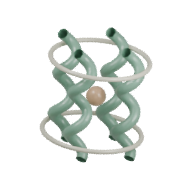
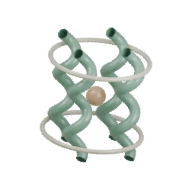
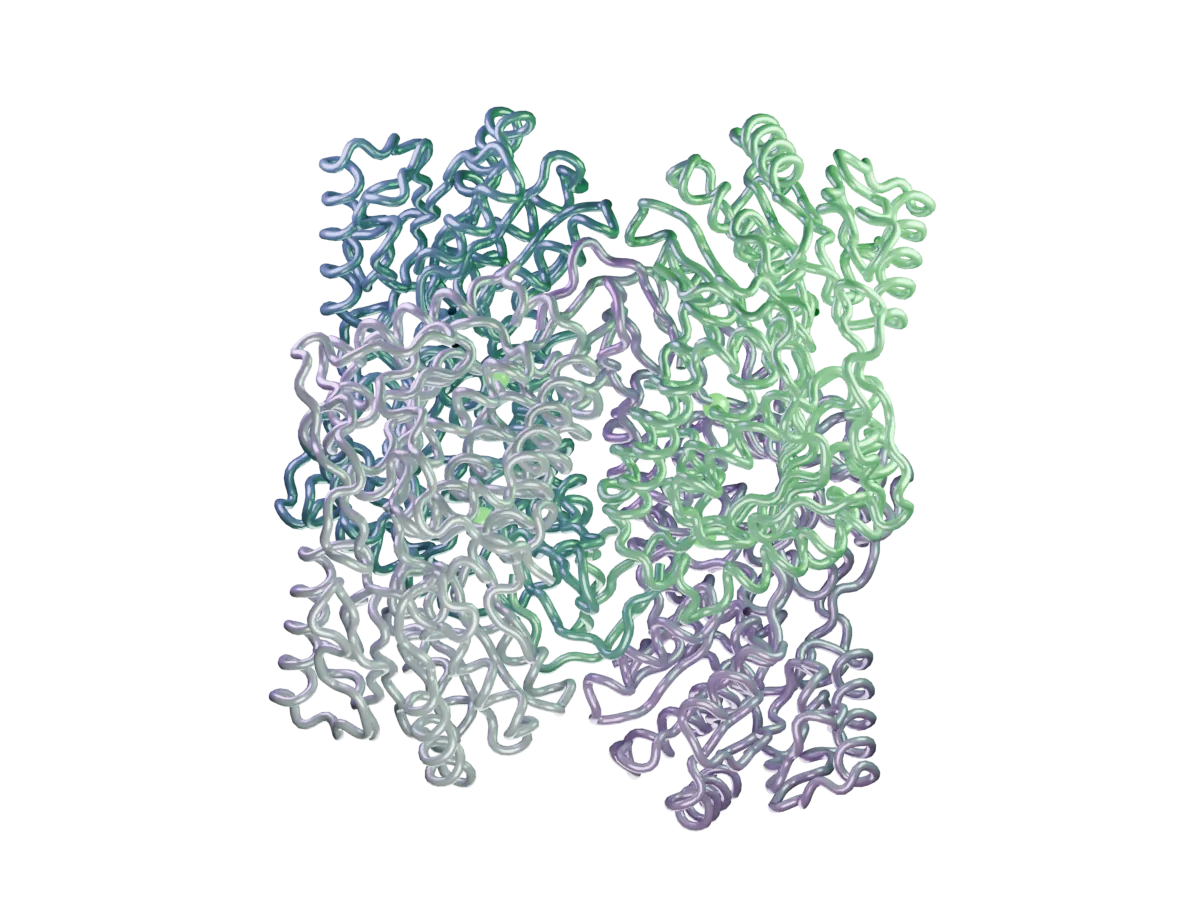
The four subunits of the published ALDH2*2 assembly.
Explore the published structurePDB 1ZUM · Simplified backbone · Illustrative colorsEducational example · Not a result from your DNA
Start with the DNA you already haveYou’ve already taken the test.
No account requiredYou’ve already taken the test.
Take a closer look.
01
Export your DNA file.
Download your raw DNA file from 23andMe, AncestryDNA, or MyHeritage. You’ve already done the hard part.
02
Check your file privately.
Choose your file. A quick compatibility check happens privately on your device, so your raw DNA stays with you.
Your raw file never leaves your browser03
Explore the longevity report.
Start with a free four-page preview. The full research edition explains supported calls across 15 markers, with original sources and limitations.
DNASIATHE RESEARCH ATLAS
English / 22 pages
A personal guide to fifteen markersEnglish / 22 pages
Your DNA, in context.
A little more understanding. A better place to begin.
15 MARKERS. FIVE STORIES.UNDERSTANDING YOU CAN BUILD ON.
ILLUSTRATIVE SAMPLE Longevity research, with Asian ancestry in viewFrom inherited risks
From inherited risks
to informed next steps.
Read the evidence with its population context. The report brings together original studies, explicit limitations and questions you can take to a qualified professional.
01
See the risk signals.
Highlight variants present in your file that published studies associate with metabolic or cellular risks.
02
Find where habits enter the picture.
Explore the research on lifestyle and the pathway involved. See what has been studied, and what has not been established for someone with your variant.
03
Know who the evidence represents.
Follow Asian population studies alongside wider research. See who was included, how much weight a finding carries, and where evidence for your background is still limited.
Your ancestry belongs in the pictureStart with your file.
Start with your file.
See what’s possible.
A private file check. An East & Southeast Asian research perspective. A clearer starting point for the years ahead, wherever you call home.
Begin my private file check No account. No payment details to begin.
The educational preview is free.
Planned full report: $28 USD, once.
Your privacy comes firstYour DNA is personal.
Your DNA is personal.
Let’s keep it that way.
Understanding yourself shouldn’t mean giving yourself away.
Private on your device
Your file is checked on your device. We don’t keep a copy of your raw DNA or ask you to hand it over.
Your raw DNA is never storedZero third-party sharing
Your DNA is never uploaded, sold to pharmaceutical brokers, or shared with academic data banks by this demo.
Your data is never for saleYou can stay you.
No full name. No home address. No account. Your identity isn’t a prerequisite for exploring your genetics.
No account or personal details needed Here to help you feel informedA few questions,
A few questions,
thoughtfully answered.
Who is DNASIA designed for?
People with East or Southeast Asian ancestry who want to explore longevity research through a perspective that puts their background at the center. That includes the global diaspora and people with mixed Asian ancestry. You can start with an existing 23andMe, AncestryDNA, or MyHeritage file; no new test or ancestry percentage is required.
Is this another DNA test?
No new test, sample, or kit. DNASIA is designed around the raw DNA file you already have from 23andMe, AncestryDNA, or MyHeritage. The demo checks compatible .txt, .csv, and single-file .zip exports locally.
What will I learn from my report?
The free preview shows marker availability. The full edition compares supported genotypes with alleles described in published research, and explains each study population and its limitations. It covers glucose regulation, alcohol metabolism, lipids, folate and longevity research. It does not calculate personal disease risk or lifespan.
How much of my future is shaped by my DNA?
Genes are one part of healthy aging. Lifestyle, environment, and other factors also matter. DNASIA aims to help you understand genetic associations and explore the research around them. It cannot predict how long you will live, promise extra years, or establish which lifestyle changes will benefit you personally. Read the source ↗
What do you mean by a risk-associated variant?
A variant is a difference in DNA sequence, sometimes called a mutation. Some variants are associated with a higher likelihood of a particular outcome in research. That association is a predisposition, not a prediction: other variants, environment, and lifestyle also matter. Not every variant is harmful, and consumer DNA files cover only part of the genome. Read the source ↗
Does my DNA file show which genes are expressed?
No. A raw DNA export records genetic variants at selected positions. It does not measure which genes are active, or how strongly they are expressed in a particular tissue or at a particular time. DNASIA’s focus is on variants and published associations, not a measurement of gene expression or biological age. Read the source ↗
Is this designed for mixed Asian ancestry?
The research perspective includes East and Southeast Asian populations, including questions relevant to people with mixed ancestry. Population labels cannot capture every person’s background. This demo does not infer ancestry or assign you to a reference group.
Does my DNA file leave my device?
No. File reading and reference checks run locally. Only format statistics and results for the 15 indexed markers remain in memory until the file is removed or the page is closed. Genotypes are never uploaded.
Will I be charged $28?
The file check and four-page preview are free. The full report costs $28 USD once, when sales are available. You can inspect its synthetic sample and your file’s supported coverage before choosing to pay.
Understand what you inherit.
Think further ahead.
Explore my DNALongevity research with your East & Southeast Asian ancestry in focus.